
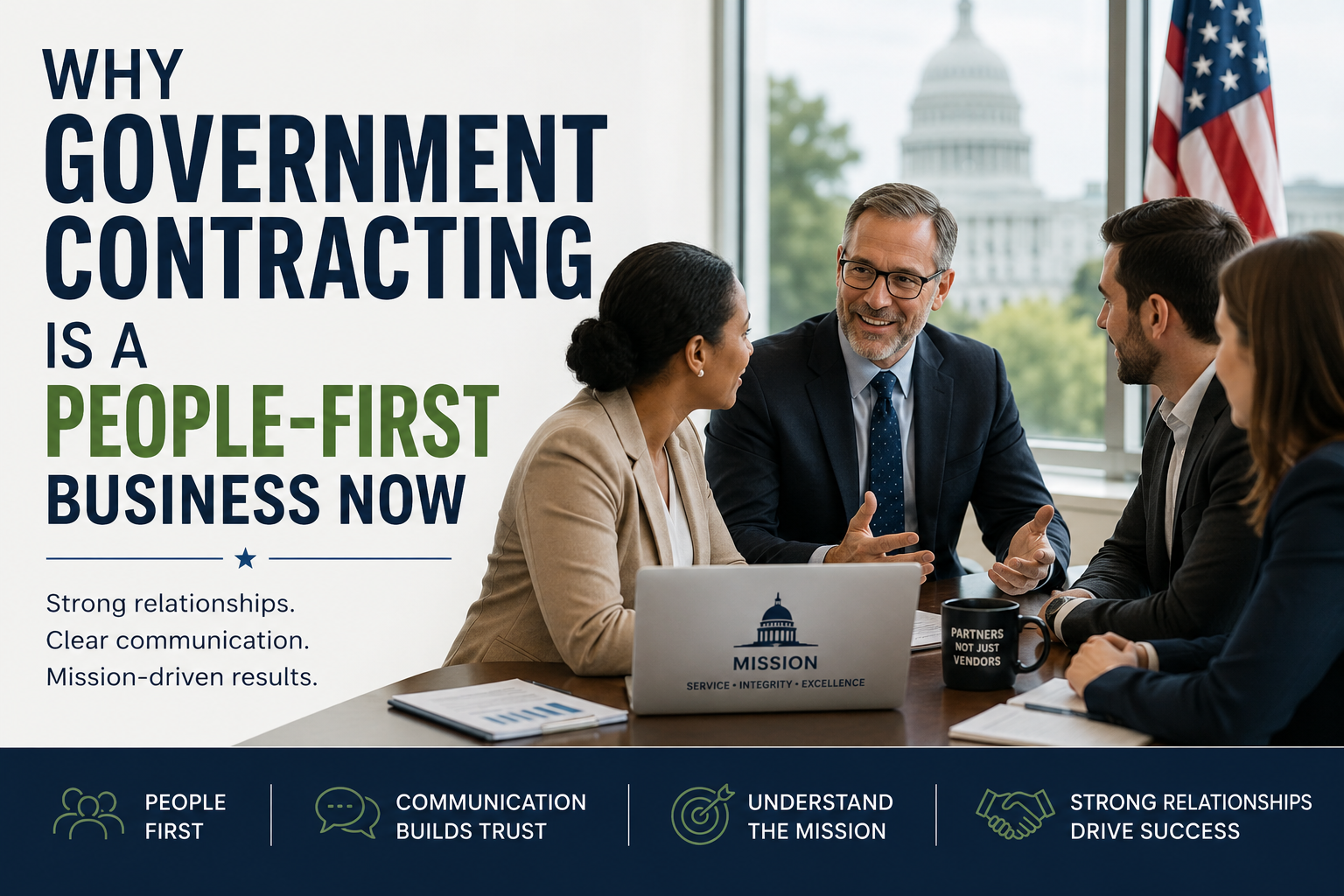
When people first think about government contracting, they often picture thick regulations, complicated proposals, and endless paperwork. Those things certainly exist, but they are not what determines long-term success.
Successful government contracting begins with people.
Behind every solicitation is a team of professionals working to solve a problem. Program managers define the mission. Contracting officers oversee the acquisition process. Technical experts identify requirements. Financial officials allocate funding. Small business specialists encourage competition. Each person plays a role long before a solicitation appears on SAM.gov.
Businesses that understand this reality position themselves differently. Instead of focusing only on winning contracts, they focus on understanding the people responsible for accomplishing the government’s mission.
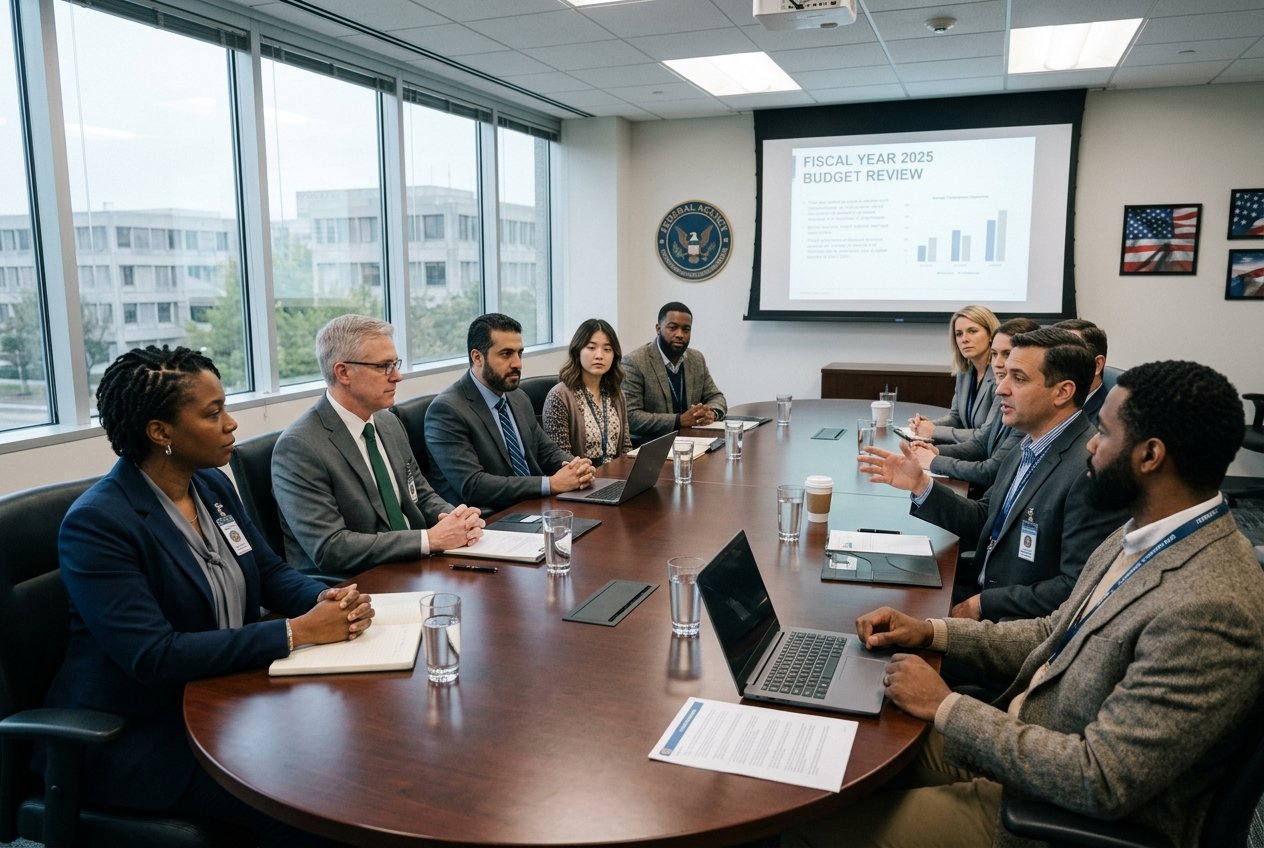
Government Contracting Starts Before the Solicitation
One of the biggest misconceptions about government contracting is believing the process begins when a Request for Proposal (RFP) is released.
In reality, by the time a solicitation appears, months—or sometimes years—of planning have already taken place.
During that time, agencies have often:
- Identified a mission need.
- Secured funding.
- Conducted market research.
- Discussed acquisition strategies.
- Consulted with technical experts.
- Reviewed previous contract performance.
- Considered industry capabilities.
By the time contractors first see the opportunity, many important decisions have already been made.
That doesn’t mean the competition is over. It does mean that companies waiting until an RFP is published are starting much later than those who have already invested time learning about the agency and its mission.
Government Buys Solutions, Not Just Products
Federal agencies are rarely looking to purchase a product simply because it exists.
Instead, they are trying to solve a problem.
Perhaps an agency needs to modernize aging technology. Another may need additional staffing to support veterans, improve cybersecurity, maintain facilities, or provide specialized healthcare services.
The contract becomes the vehicle for solving that problem.
Businesses that understand the mission behind the requirement often write stronger proposals because they understand the “why” instead of simply responding to the “what.”
That understanding usually comes from conversations, research, industry events, agency forecasts, and market engagement—not from reading the solicitation alone.
Relationships Matter—But Not the Way Many People Think
The word “relationships” sometimes makes new contractors uncomfortable.
Some assume relationships imply favoritism.
They do not.
Federal procurement rules are designed to ensure fairness and open competition. Agencies cannot simply award contracts because they know a company.
What relationships do provide is understanding.
When businesses attend industry days, schedule capability briefings, respond to Requests for Information (RFIs), or participate in outreach events, they learn more about agency priorities and future needs.
Likewise, government officials learn more about industry capabilities and available solutions.
Everyone benefits from better communication.
Strong relationships create knowledge—not guaranteed awards.
Listen More Than You Sell
One mistake many new contractors make is treating every meeting as a sales presentation.
Government officials hear sales pitches every day.
What they appreciate far more are companies that ask thoughtful questions, listen carefully, and demonstrate a genuine interest in understanding the agency’s challenges.
Instead of saying:
“Here’s everything we do.”
Consider asking:
- What challenges are creating the biggest impact on your mission?
- What capabilities are currently difficult to find?
- Would success look different for this requirement?
- Where do you see future needs developing?
Those conversations often provide insights that cannot be found in any solicitation.
Reputation Is Built Long Before Awards
In government contracting, reputation develops over time.
Companies become known for being:
- Responsive.
- Professional.
- Honest.
- Prepared.
- Reliable.
- Easy to work with.
Those qualities matter.
Government personnel frequently change positions and move between agencies. A positive reputation often travels with them.
Likewise, a poor reputation can follow a company long after a single opportunity has ended.
Building trust takes time, but it becomes one of the most valuable assets any contractor can develop.
Every Person Supports the Mission
One lesson I learned during my years in federal service is that every acquisition ultimately supports a mission.
Whether purchasing software, medical equipment, cybersecurity services, construction, consulting, or staffing, the objective is rarely the contract itself.
The objective is helping an agency accomplish its mission more effectively.
When businesses understand that perspective, conversations change.
Instead of asking,
“How can we win this contract?”
they begin asking,
“How can we help this agency succeed?”
That subtle shift often leads to stronger relationships and better long-term opportunities.
Government Contracting Is Still About People
Technology continues to transform government contracting. Artificial intelligence, automation, data analytics, and digital procurement tools are becoming increasingly important.
Yet despite these advances, every acquisition still involves people making decisions.
People define requirements.
People conduct evaluations.
They manage contract performance.
People determine whether expectations have been met.
The regulations guide the process.
The technology supports the work.
But people remain at the center of every successful acquisition.
Final Thoughts
Government contracting will always involve regulations, policies, compliance requirements, and documentation. Those are essential parts of the process.
However, businesses that focus exclusively on paperwork often miss the bigger picture.
Federal agencies are not simply buying products or services. They are looking for partners who understand their mission, communicate professionally, solve real problems, and consistently deliver value.
The companies that recognize government contracting as a people-first business are often the ones best positioned for long-term success.
Before your next opportunity appears on SAM.gov, spend less time wondering what the solicitation will say and more time learning about the people and missions behind it.
That investment may prove to be your most valuable competitive advantage.
Frequently Asked Questions
What is government contracting?
Government contracting is the process through which federal, state, and local government agencies purchase products and services from private businesses to support public missions and operations.
Why are relationships important in government contracting?
Relationships help businesses better understand agency missions, priorities, and future needs. They do not guarantee contract awards, but they improve communication and market awareness before solicitations are released.
When should businesses begin preparing for government contracting opportunities?
Preparation should begin well before a solicitation is published. Learning about agency priorities, participating in market research activities, attending industry events, and building an understanding of customer missions all improve a company’s ability to compete.