

Scroll through LinkedIn long enough, and you’ll see it happen: the joining of business and politics.
A thoughtful business post starts strong…
Then it swerves into politics.
Then the comments light up.
And suddenly, whatever insight the post was supposed to deliver is buried under ideology, outrage, and side-taking.
That moment raises a real question for anyone running a business, building a brand, or offering professional services:
Is mixing business with politics leadership—or self-sabotage?
History suggests it’s usually the latter.
4
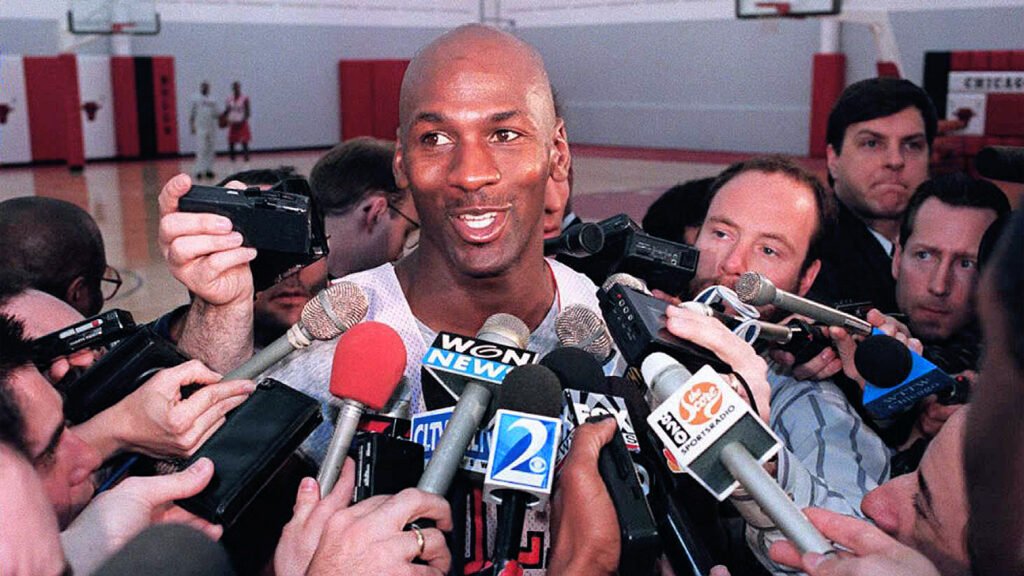
The Line Michael Jordan Refused to Cross
During the 1990 U.S. Senate race in North Carolina, basketball legend Michael Jordan was encouraged to publicly support Democratic candidate Harvey Gantt against incumbent Jesse Helms.
Jordan declined.
When pressed on why, he reportedly responded with a sentence that has lived on for decades:
“Republicans buy sneakers, too.”
At the time, some viewed it as evasive.
Later, critics labeled it apolitical, even selfish.
But from a business perspective, it was something else entirely:
Clear-eyed discipline.
Jordan wasn’t dismissing civic importance.
He was protecting the boundary between personal belief and commercial trust.
And that boundary matters more than many people realize.
Why Politics and Business Don’t Mix Well
Business thrives on:
- Trust
- Consistency
- Broad relevance
Politics thrives on:
- Division
- Urgency
- Moral certainty
When the two collide, predictable things happen—and none of them are subtle.
1. Your Audience Shrinks Instantly
The moment a brand takes a political stance, it doesn’t just attract supporters—it repels others.
That doesn’t require outrage.
It often happens quietly.
Prospects stop listening.
Customers disengage.
Opportunities disappear without explanation.
That’s not activism.
That’s market contraction.
2. The Conversation Stops Being About Value
Once politics enters the room, people stop asking:
- Is this useful?
- Does this solve my problem?
And start asking:
- Do I agree with you?
- Are you on my side?
At that point, your product, service, or expertise becomes secondary.
You’re no longer delivering value—you’re defending a position.
3. Neutrality Gets Misread as Weakness
In today’s climate, not choosing a side is often reframed as moral failure.
Jordan’s silence was later criticized.
But silence, in his case, wasn’t fear—it was focus.
He understood something many brands learn the hard way:
You don’t owe the public your politics to earn their trust.
What Happens When Brands Ignore This Lesson
The danger becomes clearer when you look at brands that crossed the line.

4
Case Study #1: Bud Light & Dylan Mulvaney — Misalignment at Scale
In 2023, Bud Light partnered with Dylan Mulvaney in a promotional campaign.
The intention may have been inclusion.
The outcome was disruption.
Bud Light’s core customer base—built over decades—didn’t see themselves in the message. And the reaction was swift:
- Boycotts followed almost immediately
- Sales dropped sharply
- Shelf space shrank
- The brand entered extended damage control
The key issue wasn’t ideology.
It was a brand-audience mismatch.
Bud Light didn’t just make a statement—it accidentally told its most loyal customers they were no longer central to the brand’s identity.
That’s not courage.
That’s a miscalculation.
4
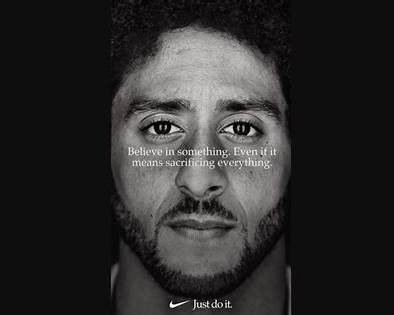
Case Study #2: Nike & Colin Kaepernick — A Calculated Gamble
Nike took a very different path.
In 2018, Nike featured Colin Kaepernick in its “Dream Crazy” campaign.
The backlash was loud:
- Public protests
- Product burnings
- Political outrage
But here’s the distinction that matters:
Nike knew exactly who its core audience was—younger, global, urban, and culturally progressive.
Nike didn’t stumble into controversy.
It accepted polarization as a strategic trade-off.
And while the reaction was intense, the long-term result was:
- Increased relevance with its target demographic
- Strong international engagement
- Reinforced brand identity
Nike chose conviction with full awareness of the cost.
Most businesses don’t.
The Real Lesson Most Brands Miss
These stories are often lumped together, but they shouldn’t be.
The difference isn’t bravery.
The difference is alignment.
- Jordan chose universal appeal and longevity
- Bud Light misread who its brand actually served
- Nike knowingly narrowed its audience to strengthen its identity
Here’s the uncomfortable truth:
Most small businesses, consultants, and personal brands are far closer to Jordan than to Nike.
And acting like Nike without Nike’s scale, insulation, or audience clarity is how brands quietly bleed trust.
Why This Is Especially Risky for Personal Brands
If your name is the brand:
- You don’t have a PR team
- You don’t have investor buffers
- You don’t get to “wait it out.”
- You don’t recover easily from missteps
One political post can undo years of credibility—not through outrage, but through silent disengagement.
People don’t argue.
They just leave.
Values Matter—But How You Show Them Matters More
This isn’t an argument for being hollow or unprincipled.
There’s a difference between:
- Values (fairness, integrity, respect)
- Politics (parties, candidates, ideologies)
Strong businesses live their values through:
- How they treat people
- How they operate
- How consistently they deliver
You don’t need to attach your brand to a cultural battle to demonstrate integrity.
Jordan didn’t.
And his brand outlived the debate.
A Simple Filter Before You Post
Before mixing business and politics, ask yourself:
- Does this help my audience—or test them?
- Does this build trust—or force alignment?
- Am I prepared for a quiet customer loss?
- Would I post this if revenue depended on today’s reaction?
If that question gives you pause, pay attention.
Final Thought
Every brand chooses a lane—sometimes intentionally, sometimes by accident.
Michael Jordan chose longevity.
Bud Light learned the cost of misalignment.
Nike accepted polarization as a strategy.
Here’s the part that often gets missed:
You’re absolutely entitled to your personal beliefs.
You can vote how you want, think how you want, and argue your positions at the dinner table, in private conversations, or on personal platforms.
But when you’re making decisions for a business or a brand, the lens has to change.
A company doesn’t get to operate purely on emotion.
It has to consider:
- Who it serves
- Who it excludes
- Who quietly walks away without saying a word
Business decisions require distance, perspective, and restraint—especially when emotions are running hot.
Most businesses don’t get Nike’s upside.
But they do inherit Nike’s risk.
That’s why discipline matters.
In business, discipline often looks boring.
It looks like staying focused.
It looks like resisting the urge to react.
It looks like choosing longevity over applause.
And boring brands—the ones that don’t chase outrage or validation—tend to survive.
And survival—steady, trusted, and durable—still beats winning the comment section. of misalignment.
Nike accepted polarization as a strategy.
Most businesses don’t get Nike’s upside—but they do inherit Nike’s risk.
In business, discipline often looks boring.
But boring brands tend to survive.
And survival—steady, trusted, and durable—still beats winning the comment section.